
CentraLit recently had the chance to talk to Nancy Stanford, author of the Letters to Sarah series. Nancy is one of the original members of CentraLit, having attended our very first open mic. We are so excited to share this interview discussing Southern Illinois and what’s next for Letters to Sarah.

This interview has been edited and organized for space and clarity.
CentraLit [CL]: It’s really amazing how [in Letters to Sarah Book 1] you are able to sort of get into the headspace of this young woman and all of the things that she’s gone through.
Nancy Stanford [NS]: Well, I’ll tell you something. I think I hit on it because I’ve gone through a lot of that. So I think when we write, we tend to draw on what we know anyway. Considering what inspired it – the way it was written, the letters, you know, being epistolary and the things that she was going through – considering what inspired me to do that. All the emotion, everything that came out of me went into her. If you try to fake it, the reader knows.
CL: The world is shaping the way Sarah sees the world and how she understands her place in it. How did you decide to include that aspect?
NS: It all started because my mother passed away when I was ten, that was 1964. So, all through these years since there’s been times when I would say my mother wouldn’t have known anything about this, or my mother would never have experienced this. I still to this day, have out loud conversations with her, explaining to her things like what a microwave is. Why do I have a salt lamp sitting over there? What is that supposed to? So what does that mean? You know, and what are these little things with the blue light? Well, they’re security cameras, you know, and everybody has them. Our cars, the stores we have, how we shop, what we buy – just the majority of things about our lives. She didn’t live to see that. She didn’t know we landed on the moon, she wouldn’t know what a space shuttle was if she was standing in it. I think the minute I knew was when my step grandfather had passed away just several years back now. In his things they found a packet of letters that my mother had written to him during the last year of her life and somehow or another, they got to me. So there I had this packet of letters that’s written in her hand, in her words. I was sitting on this floor and I had them all spread out and I was reading them again and again and it hit me that I was getting to know her through her words and her views on things and and what was going on in the world. When that struck me, I thought, you know, that is the only way to write this, because we’re dealing with someone. [In Letters to Sarah] Mary is dealing with life without her sister, she’s dealing with her losses, she’s dealing with the world, she’s dealing with so much, but by herself in the beginning, and I thought the only way we’re going to understand what she’s going through and how she’s going through it is through her own words. Just like I was getting to know my mother. So I had several manuscripts started; most of them I called something like ‘Conversations with my Mother’ because, as I said before, I was always having these conversations out loud explaining to her what the world was like. When I finally figured out how I wanted to tell it and my characters got them in my head. That changed the name, changed the perspective, and that’s how we ended up with letters to Sarah.
CL: History plays a large role in the books, right?
NS: The history of it is well, twofold. First of all, I’m a history freak, but second of all getting to know the person is one thing, but getting to know the world around them is something else, not to mention it helps us understand why she’s thinking what she’s thinking and why she’s doing what she’s doing. Well, you know. Germany is taking over, you know, and Hitler’s going nuts and, well, that’s what we’re getting into. So yeah, yeah, yeah. I’m doing research for [Book 4] and that’s the 1940s. So yes, everything is getting very, very real. The 30s was very interesting. I was thinking earlier how I’m going to have to reread book three, so I don’t screw it up. I’m getting more and more characters so I’m having to remember what everybody’s doing. It’s like it’s like watching my own family grow and grow, you know? There you are.
CL: You do so much to make them historically accurate, that’s something that’s hard to find. Sometimes you’ll be reading a historical book, and then you’ll think something happened and then you’ll look into it and it’s like something that totally did not happen. So what’s the research process like?
NS: Lots of Googling, lots of library visits because you know they have encyclopedia which are actually, you know, good things. I grew up with a set of encyclopedias in the house, and I read them like they were the most best selling fiction in the world because I loved learning it all. And so I Google a lot and I have a couple of websites that I go to and they’re written down in [the office], I couldn’t possibly tell you the name. So everything on the wall in the office and there is either on a post it note or on a dry erase board. I’ll find things, and I write them all down. Everything with me the first time around is all pen to paper so I have a notebook that has OK in May of 1939… Then I go down through these pages, these websites that I found and the books that I find and well, this happened on the 3rd. So I write it down the 3rd and then I write out what happened – Sometimes just a quick idea so that I can go back later if I choose to and look it up more deeply. I will sit at the library and books spread out in front of me about certain subjects. When I was going through World War I in the first book. I would go there and I would sit and I would read pieces out of these different books concerning World War I, so I get the perspective of it, the atmosphere of it, you know, get to understand how people were thinking about it at the time, because I’m having to write this as someone who’s living at that time. That’s what gave me a little trouble at the beginning, but then when I set myself into Mary’s head. It was like, OK, yeah, this makes sense. But The thing is, I’ve known people when I was a kid, I knew people that were born in the late 1800s.I knew my great grandmother and she was born in 1896. And so I’ve known people through my life that have lived at these various times. I think about those people and how their mindset was and when we’d have a discussion about anything or how they thought about it, how they spoke, the whole thing. So that’s helped a lot.
CL: When Brittani [CentraLit Editor] was growing up homeschooled, historical fiction was used as a tool for teaching history when history textbooks weren’t holding attention – you can fall into and learn from historical fiction in ways it is sometimes hard to get from a textbook. Letters to Sarah has value in that way.
NS: So my grandson, when he was fifteen, picked up the first when he’s sitting on my couch and he opens it and he goes, “What’s this?” And I said, “Well, that’s the first book I wrote. So he picks it up, turns the page and he reads the first letter and the next thing I know, he’s halfway through and he looks up at me and he says “G-ma, this isn’t just for girls.” I had never thought of that. I just thought, well, it’s family friendly, you know, it’s age friendly, there’s no age limit on it. Just recently I had a book reading at one of the shops downtown [in Salem, IL] and these two young girls came in and they said “It’s history?” You know, they got that look. And I said yes, it’s historical fiction. I said the characters are all fiction, but all the history is right, as right as I can possibly get it. I said, don’t think I don’t remember how dry and boring history class was. it was always so and so did this on this date, this happened on this date this and you write all that down, you make all those notes, you pass the test and then you forget. And I said that’s one of my biggest things with these books is to make it where the history is interesting. It’s not like shoved in your face and there’s gonna be a test on this later. They were interested in it and I think one of them actually bought a book later so… It’s kind of cool.
CL: You research history, how do about your characters?
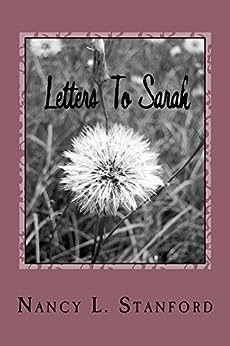
NS: Well before I published the first one, I think the research was more than 20 years. And I had enough. research done for the first three books. And it took way before Anna [Nancy’s daughter] was born. So she’s now going to be 27, so you can imagine how long this has been in the works. So now of course I have to start the research thing all over [for Book 4]… Lana [Shaw] keeps telling me you’re going to write another one because Mary still has stuff to say. That may be, but Mary’s not the one writing it. Although she is actually, it’s kind of a paradox, isn’t it, anyway? How we bring these characters to life and they almost direct themselves. Well, I’ll tell you something. When I write something, the characters do write it because I will start out with a general sort of idea and it never goes the way I think it’s going to go ever. The characters, it’s like they’re talking in my head and they say no, I wouldn’t do that, you got to do it this way. So I have to switch it and what’s cool to me I think one of the best things that Literature is… is to see things from so many different perspectives, and it’s quite astounding, I think, to me, just how important the world at large is to developing somebody’s character. And I think that, you know, whether you write historical fiction or not, you know, at least if you’re writing realism, but even if you’re not writing realism like this happens, and you know, sci-fi and you know any other type of genre, whenever you’re trying to embody a character, you’re always trying to embody in a way that you know you’re showing who this person is through the experiences they had in their life. And but you know, politics and history and you know, everything going both completely affects how somebody is, even if it’s like you said, science fiction or fantasy. You want to write characters that the readers can relate to and I don’t care if it’s Lord of the Rings or Star Wars. They have the same general… What do I want to say? The same general things that that push them in their lives. You know, you have certain kinds of people and people who fall into similar backgrounds. And it doesn’t matter what genre you like, it doesn’t matter what genre we’re talking about. People are who they are so. It’s pretty cool.
CL: Very cool.
NL: I had a double major in English and psychology. And the psychology was the most fascinating thing for me when I’m writing because I understood to a point why people did the things they did, and that really helped in developing characters, I’m very that’s one of my things I I have a hard time writing a very, very long story. And I’m surprised I’ve made it through three books already because I call myself the Super Queen of short shorts, you know? But I love doing character sketches, absolutely love it. I’ve got two drawers full of scraps of paper napkins, notebooks, backs of empty notebooks, paper bags. You know, that something will come to me I’ll write. I took a trip to New England few years ago and I had a layover it at the station in Chicago and I’m sitting there with my notebook and I’m watching all these people. I am writing bits and pieces about these people, how they came across to me as I sit there and observe them, and a couple of them were in book 3! Yeah, that’s all we’ll say.
CL: When we were in undergrad, [our English professor] used something similar as an assignment. It was one of our, you know, one of the writing classes we had, he said one of the best ways to learn how to write dialogue or in general just understand character is to just kind of people watch. He had that as like a bonus point assignment in one of his classes ,too, that you could go and, like, eavesdrop and people watch.

NS: Hey, I never had any problem whatsoever doing that. I would write down what I heard, and then I’d run with it. You know, I’ve always done that. I can remember writing a paragraph about my great grandmother and I don’t know what happened to it, but in my head because it was so important to me. You know when I was a kid, my dad used to take us on a Sunday drive and we would go to Saint Louis to the airport and just sit there and watch people watch the planes, watch the people. It was heaven. You know, I always had these these ideas about, OK, who’s getting on that plane? Why are they getting on that plane? Where are they going? Why are they going there? And what happens once they get there? You know, all kinds of questions. That’s the kind of of thinking I think that’s gotten me to where I am now. You know you if you’re not asking questions, you’re not learning. You’re not advancing, I guess. You’re never too old to learn. You’re never too old to ask questions, and there’s not a single stupid question in the world. So there you go.
CL: Ah, So what made you decide to write letters to Sarah from the perspective of Mary specifically and her situation? Why, Mary?
NS: Well, like I said before, I had Mary in my head and to begin with it started out as two different stories. One of them was conversations with my mother, but the other one had to do with the history and they merged at some point. I started writing it the way I did because of those letters that I received. I mean that was just like somebody banging you over the head and saying, “excuse me, this is what you do and this is how you do it.” We don’t argue with that. You know, you go with it and it was right. So Mary, the character of Mary and just her specific situation, this young girl who’s lost her sister. How she’s gone through this? That’s fiction. The fact that she lost a close family member, of course, was based on the fact that I lost my mother, but I didn’t want it to be from that perspective. You know, you love your mother and you don’t want to lose her. You’re different generations and you don’t see things the same. But a sister? They were only two years apart and this is 1910 and in 1910 your social life consisted mainly of your family. There was not all this running around and, you know, traveling and whatever. So they were closer than close and I thought that from that perspective… Be more likely to express the emotions, the feelings, the problems, the terrors, the happiness. I thought that would tend to make it more personal to the reader. So yeah, nothing quite like the sisterly bond.
CL: Do you feel like having lived in Southern Illinois and you know being here, how do you feel like that’s impacted your writing and like the things you choose to write about?
NS: I think it’s had everything to do with it. I, like I said, you know, you observe people and especially if you observe people from other places. I have lived on all three coasts, I have been to about two-thirds of the States, so I’ve managed to meet and observe people from all walks of life. And I think that that I was born and raised here in Salem [Illinois]… I traveled all over and then I ended up back here, and I think that this area, the atmosphere, the people, have made my writing, to me, feels more real, I guess, more down to Earth to a point. Yeah, I think I think that growing up around here where people are mostly nice and helpful to each other, people down here seem to look out for each other more than I’ve noticed in a lot of other places. They’re open to out of towners. Just in general, I just feel like this area is a down to Earth friendly place and I think that. That made me feel more comfortable writing at all. Of course, I’m blessed, I have a lot of friends who are very supportive and encouraging, and that makes a big, big difference. The area where you grow up, the area where you are has a lot to do with what comes out of you. And I don’t care whether it’s writing, or painting, or what it is. We react and react differently, judging on our environment. And you know, this is such a great area for the arts in general, really and very supportive of the arts, too, and I think it’s really nice. I’ve talked to people from other areas and they think Southern Illinois, what do you farm corn? I said, “Well, and soybeans and wheat, but I also write stuff.” Yeah, we’re an eclectic group.
CL: What’s the best writing advice that you’ve ever been given or the best advice that you could give to our readers?
NS: It’s an ancient quote, from Epictetus: “Do you want to write?” Really is that simple. You know, and it doesn’t even have to be good. It doesn’t matter as long as you pour it out of yourself. I feel I look at myself like if you put a picture outside to collect the rainwater every day. Every raindrop that goes into that pitcher is an experience. It is an emotion. It is a person in your life. It is something that’s happened to you around you because of you. And once that picture’s full, it’s got to go somewhere. So write it down. Listen, I have a journal – I never miss a day. I’m traveling, it goes with me. The last thing I do before I go to bed is I get in bed, I sit down, I write the date the time and I’ll write, “dear mom” and whatever I feel like writing, I’ll write and that’s for nobody’s view but mine. My son thinks that once I’m gone from the mortal world, he’s going to read all of my journals… As soon as one’s filled up, I shred it. But you know, but the important thing is to write it. And I was just before [this interview] I was in the office and I was trying to get myself pumped up for writing, right? So I when I do that I do stream of thought. I don’t worry about grammar, punctuation, anything, I just start writing. And I go from “my interview is in 30 minutes” and I end it with something like dealing with anxiety about not going into crowds and not doing this and it was strange and it doesn’t matter, you know, it helps me to get it out of my system. Just like that Epictetus quote: “You want to write, right?” You know, and don’t beat yourself up for not being Stephen King or JK Rowling or John Grisham – Nobody is. They’re a very, very, very few writers who reach that level. The important thing is to reach your level. You only succeed if you try, the measure of success is something else. I feel like I’m a success if somebody tells me how much they enjoyed something I wrote. And believe me, I’m not rich, you know, I’m not selling a thousand books a day. No. And never will. Most likely. But that’s OK by me. That’s OK.
CL: Book Four of Letters to Sarah is in the works, what can you tell us about that and the future of the series?
NS: We’re going into 1940 and considering the cliffhanger at the end of [Book 3]… We got to go into that. I have this thing about cliffhangers, I don’t know why. I just think it’s fun so. They’ll all have a cliffhanger! But we’re going into 1940, and we all know what happens in 1941. It’s going to have a lot to do with that. Her children are older, there are grandchildren involved now, the family keeps growing. I suspect there’s going to be some turmoil family wise. Mary’s dealing with… I don’t know if I want to mention exactly what she’s dealing with. Because I like for when you read them there’s subtle hints at what she’s handling. I’ll say it: She suffers with depression and back then, of course, it was melancholy. She was just having an off day, you know, whatever it was, yeah. But I think as we go along and the world changes and learns more about such things that will come into play a little more so we’ll see how it does in the fourth.
CL: How long do you think the series may end up being or do you know like how you want it to end?
NS: Well, I’ll tell you this: Before I ever started book one, I wrote the very last letter in the series so I know exactly how it’s going to end. As far as how many? I originally expected ten, because I had in my head that Mary was going to live to be 100, but I’m not so sure. The more I get into it, the more I write the more I can’t see it going that long. So I’m thinking for sure five. After that, we’ll have to see. It depends on what the characters do in the meantime, and I don’t know what that’s going to be so. It’s like the last letter in each of the books, I was surprised to too. A lot of writers have to outline everything beforehand, I couldn’t follow an outline if my life depended on it.
CentraLit would like to thank Nancy for taking the time to speak to us. Letters to Sarah books 1-3 are available for purchase on Amazon, and we anxiously await the release of book 4!
About Nancy Stanford
Born and raised in Southern Illinois, Nancy Stanford enjoys the outdoors. She finds fishing and hiking inspire her writing. Nancy especially enjoys developing characters based on every day folks. As a grandmother, she especially enjoys creating stories for the little ones. Ms Stanford published the first book of her series, Letters to Sarah, in 2017.
 CentraLit